


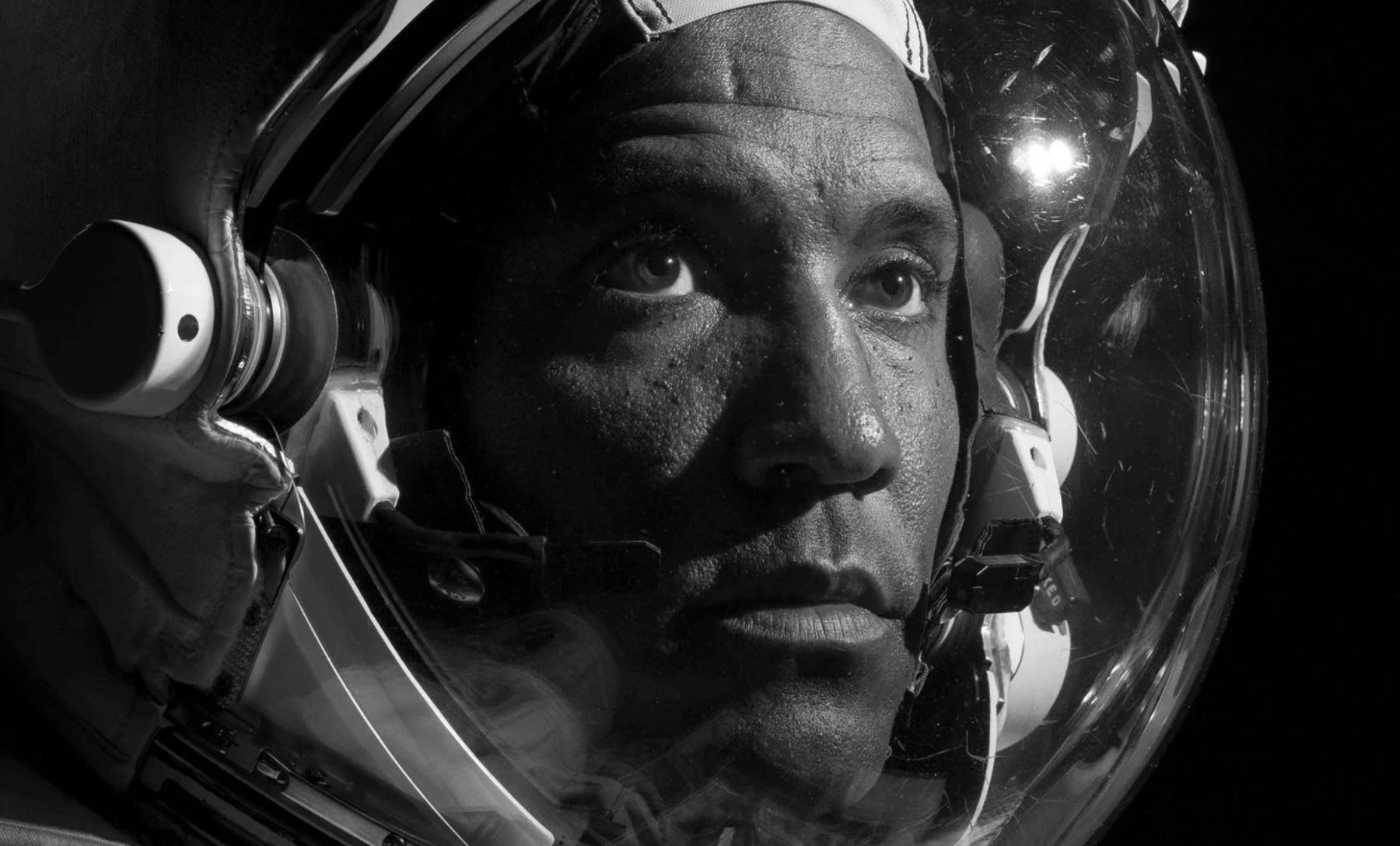
Headlines these days fly off the press like rockets—only they’re more relentless. So unrelenting, in fact, that within days of breaking the human distance record, talk of NASA’s Artemis II mission around the moon had already yielded to the next big thing.
But, while their technical triumph—a new record—will be remembered, the Artemis II crew brought back to earth a moral victory far more durable. One we should continue to savor.
At a May 1 CBS town-hall event with the four astronauts in front of her and the world at her back, 11-year-old Ameya asked Captain Victor Glover: “How did it feel to be the first person of color to fly around the moon?”
“Good question,” a host can be heard saying.
Glover, who had just piloted the billion-dollar Orion capsule around the moon, seemed a little piqued by the question.
“You know, Ameya. Thank you for the question,” he acknowledged.
Then, as if drawing inspiration from his view of earthrise in lunar transit, Captain Glover supplied one of the greatest object lessons on teamwork, selflessness, and the post-civil rights American ethos seen in a generation.
“One of the things about swinging for the fences and trying to hit a home run when the game is on the line, is if you think about that,” gesturing at himself, “that can add pressure and make you not go up there and play your best game.
So I focused a lot on working with this team, and trying to be a good teammate…. I think one of the reasons we were as successful as we were, is that we spent a lot of time thinking about us, not me individually.”
For the visual coda, Glover then pointed to the Velcro-backed iconography of his flight suit.
“I spent a lot of time thinking about this patch,” touching his NASA insignia, “and this patch,” his right hand fixing on the American Flag.
“...Not this patch,” he concluded, pointing to his name tag.
Glover’s response was an exquisite embrace of the post-civil rights consensus, a norm that governed the American spirit from the mid-1960s until its recent, unceremonious displacement.
No child can be faulted for the preoccupations of her era.
For the better part of five decades, we moved fitfully, but with clear intent, toward a state of social grace where a pilot’s ancestry was as relevant to his mission as his shoe size. Progress was measured by the degree to which an individual could be seen as an individual, judged by the content of his character rather than the demographic circumstances of his birth.
No child can be faulted for the preoccupations of her era. In another time, Ameya might have asked the astronauts about the roar of the engines or the blackness of the void. That her question invoked the color of Captain Glover’s skin reflects an education seasoned with the noxious flavors of race essentialism, the belief that race is not superficial, but a fixed essence that precedes the individual. And it’s no wonder.
For years, entire institutions have worked with frantic industry to reinstall race as the primary lens through which human achievement must be viewed. Where race has been provided as the first and most important tool for understanding the world, too many young people have been trained to see the category before the citizen.
Glover’s gentle redirect was an act of profound kindness and public service. By defending himself (and all of us) from demographic reduction, he invited us out of the cramped quarters of constructed racial categories, into the frontiers of shared human endeavor. By emphasizing the mission patches over his own name tag, he did not tell Ameya that her identity was unimportant. He showed her that her light needn’t be confined to narrow hallways—that her gifts should redound to human history.
Captain Glover, bless him, reminded us all that the older American ethos, which rejects essentialism, prizes universalism, and honors the individual, remains the most effective way to organize a civilization.
It is the only path to the stars that keeps our feet planted firmly on common ground.
Adam K. Thompson is the communications manager at the Prohuman Foundation. A Maine native, he studied at Colby College and lives with his wife and daughter in Vietnam.
Opinions expressed by guest authors do not necessarily reflect those of the Prohuman Foundation. We value diverse perspectives and invite submissions from those who can enrich our understanding of topics close to our mission: to promote the foundational truth that we are all unique individuals, united by our shared humanity.

Together, we have made immense progress building a foundation for social harmony. But, we still need your help. A generous donor is matching every contribution to the Prohuman Foundation, dollar for dollar, up to $250,000. Join the movement and double your impact today.
 | A guest post by
|
Yes - cheers to Capt. Glover!
One of the most beautiful and essential writings that I've read in a very long time. And such a welcome relief from the race wars that divide and demean us so terribly (cf Helen of Troy). Thank you so much for this excellent and inspiring post.