


Editor’s Note: This is the first in a series of original essays by Prohuman Foundation advisor Dr. Michael Tobin. The truths he reveals in this piece about libraries—supplying refuge and reflection, connecting lives across time, sustaining the human story and shaping the moral imagination—speak vividly to the tenets that anchor our educational programs at the Prohuman Foundation. They inspire us, as we hope they will inspire you, to continue reading.
There’s a place I visit without actually going anywhere. It usually begins when I’m reading. I’m holding a book, and something in it—a word, a sentence, or an image—causes my mind to shift sideways. Suddenly, I’m no longer in my house.
I’m in a library next to a pond.
A white building sat atop a small hill. The simple columns made it seem as if it had been there long before I arrived, at least to an eight-year-old. It didn’t resemble my school or the stores along the main road. It looked like it was guarding something precious. The paint shone in the afternoon sun so brightly you had to squint as you climbed the steps. Inside, whatever was hidden wasn’t gold or coins, but something you could carry home in your arms. The doors were heavy and closed with a soft thud that silenced the street. Inside, the temperature remained steady. In summer, it felt cool; in winter, warm, but the atmosphere was the same—a quietness that makes you walk more carefully; your shoes made a dull sound on the wooden floor; the people instinctively lowered their voices; sunlight moved slowly across long tables and wooden chairs as the afternoon drifted toward evening.
Behind the building, the pond expanded wide. With bread in my pocket, I observed which ducks rushed forward and which stayed back. I threw pieces near the shy ones first, gently coaxing them closer before the bigger birds gobbled everything up.
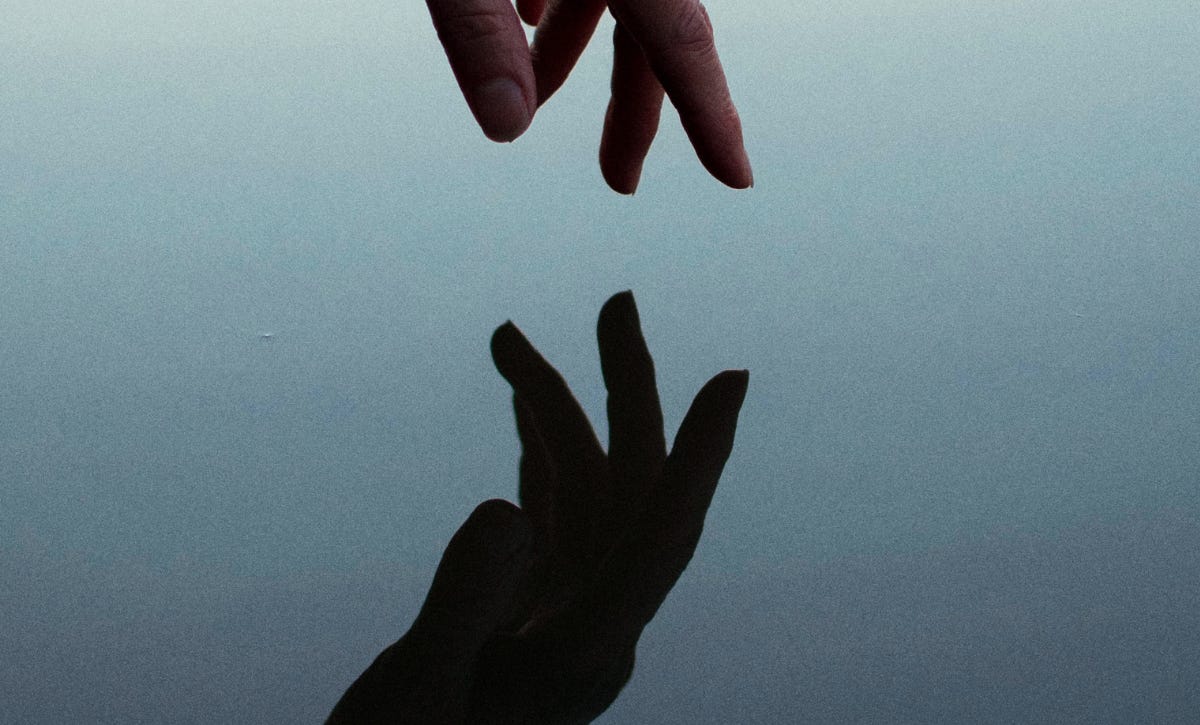
Across the pond stood the old mill and a row of trees. On still days, they reflected in the water—roof, windows, branches—so clearly that, for a moment, it looked like there were two mills and two rows of trees, one right-side up and one upside down. When a duck crossed the surface, the reflected image bent and wavered before settling back.
I didn’t think about reflections back then. I just watched the water settle after each disturbance. But something about that double image stayed with me. Light and water could alter how the mill appeared without changing the mill itself. Years later, I realized that memory and writing do something similar.
We called it the Roslyn Library, but the official name was The Bryant Library. The letters were formal and deeply carved into the stone. I didn’t yet know that William Cullen Bryant was a poet or that he had once walked through the village of Roslyn. I only knew the name sounded old, like it belonged to the same era as Abraham Lincoln—the kind of name printed in my history books in heavy type.
I started going there regularly in 1954. Dwight Eisenhower was president. The TV in our house was small, black-and-white, and adults talked about communists as if they might be hiding anywhere. I didn’t understand politics, but I knew the world beyond our street carried importance. That year, I watched baseball on our small TV, sitting so close my knees nearly touched the cabinet. When Willie Mays ran with his back to home plate and caught the long fly ball off Vic Wertz in the 1954 World Series, I saw it as clearly as if I had been standing in the outfield grass. Later, I described the play to others as if I had been there. I was learning something unconsciously: a story, told vividly enough, could immerse you in events you’d never actually witnessed.
The children’s shelves were low enough that I could run my finger along the spines as I walked. I chose books by color and thickness, then opened them to a random page and read the first paragraph right there in the aisle.
At night, I read my borrowed books in bed with a flashlight under the blanket, listening for footsteps in the hallway. I turned the pages slowly so they wouldn’t rustle. When the floor creaked outside my room, I switched off the light and held my breath until the house settled again.
I read every Oz book the library had. The moment I revisited most often was the Wizard’s reveal: a man hidden behind a curtain pulling levers to create a commanding voice. I don’t remember laughing.
I remember feeling unsettled—the noise, the smoke, the authority—and then realizing there was nothing behind it. I recognized I had seen something similar before, something I could not quite identify.
But the story didn’t end in disappointment. The Scarecrow had already solved problems, the Tin Man had already cared, and the Lion had already acted bravely. They didn’t become worthy because someone told them they were. They were told because they had already acted. I didn’t realize at the time, but I was beginning to gather examples of the various ways someone can live.
Soon, I reached for thicker books. I opened a biography of Benjamin Franklin and paused at the illustration of him flying a kite into a storm, a metal key tied to the string, lightning racing toward his hand. I tried to imagine choosing to stand under a dark sky, inviting an answer from it. Pages later, he was in France speaking with men in powdered wigs, representing a country not yet secure in its existence. The same person who experimented with electricity negotiated with kings and helped invent civic institutions.
I began to sense that a life could be large.
Then I discovered Clarence Darrow. I read about the Scopes trial—a courtroom in the Tennessee heat, a lawyer questioning belief itself with careful sentences. I read his plea in the Leopold and Loeb case, not denying guilt but arguing against execution. He stood in opposition without shouting.
Words themselves could be action. Different lives, different centuries, different kinds of courage—but all asking the same question: how does a person live well?
Then I opened The Rise and Fall of the Third Reich. I understood enough to feel troubled. The people described weren’t imaginary monsters from stories but ordinary citizens participating in events I couldn’t reconcile with the hopeful world I’d been building from Oz, Willie Mays, Franklin, and Darrow. I asked why no one stopped it. I asked why Jews didn’t fight back. The adults around me didn’t know how to answer.
At that time, history became a direct part of my life.
I came home one afternoon and told my mother that my music teacher, Mr. F., had hit me. She listened and then called him. I stood nearby while she spoke. Her voice remained controlled, almost neutral. She hung up, approached me, and slapped my face—that was the only time she ever hit me. Then she said, “That is the first and last time you will ever insult a Holocaust survivor.”
I had mocked his accent earlier that day. There was no lecture, just the realization that the man I saw every day had a life hidden from me but still alive inside him. Until that afternoon, the Holocaust had only existed for me in books. Afterwards, it took a prominent place at the front of a classroom.
I started to realize that history doesn’t vanish when the page is turned. It lives on inside the people who experienced it. I returned to the library and read about the Warsaw Ghetto uprising and Anne Frank. The pages no longer focused on distant events; they depicted something real in people I knew.
I rode to the library in every season. The winter wind made my eyes water. The summer heat warmed the handlebars beneath my hands. Before heading home, I stopped at the pond, broke bread, and watched the water smooth itself after each disturbance.
Back then, I didn’t see any of this as education. I thought of it simply as going to the library. Only much later did I realize I had been learning how a human life can exist in more than one time. Through books and through other people, lives continued beyond the years that contained them.
I thought I was borrowing books. In reality, I was borrowing lives. And once you’ve experienced enough lives through books, another possibility eventually emerges—
Perhaps one day you might return something to those shelves.
Even now, when a sentence catches, and the present relaxes its hold, I can still see the pond behind that white building: Two mills. Two rows of trees. One sits above the water, while the other continues patiently below.
Dr. Michael Tobin has spent more than fifty years listening to people’s stories and just as long trying to understand his own. A clinical psychologist, award-winning author, and Prohuman Foundation advisor, he began writing at twelve with a three-act play about the Warsaw Ghetto—a child’s attempt to grasp courage and loss. His memoir, Riding the Edge, A Love Song to Deborah, won the Silver Prize in the Nonfiction Book Awards; his novel The Veil earned third place in the BookLife Prize; and his essays have received awards from The Free Press and Letter Review.
His latest novel, Resonance, co-authored with Daniel Chertoff, will be published in October 2026. He writes, he says, “to create characters who live at the edge of brokenness and beauty.”
To learn more about Dr. Michael Tobin and his writing, visit his website. For a deeper look at his forthcoming novel with co-author Daniel Chertoff, visit resonanceanovel.com.
Meet The Author
Dr. Tobin will join the Prohuman Book Club on Thursday, June 25. Join the club for more information and invitations to future events.
Opinions expressed by guest authors do not necessarily reflect those of the Prohuman Foundation. We value diverse perspectives and invite submissions from those who can enrich our understanding of topics close to our mission: to promote the foundational truth that we are all unique individuals, united by our shared humanity.
 | A guest post by
|
Great story. From a reader whose second homes are libraries.
As I've been a substack reader for years I simply dove into this essay with no preconceptions. Thinking how the described library was so similar to mine although the aroma of old books is what sticks to me, only to find out it was my library! I too started out in Roslyn but was fortunate to be moved to Manhattan when I started high school.
Very much enjoyed the essay.