

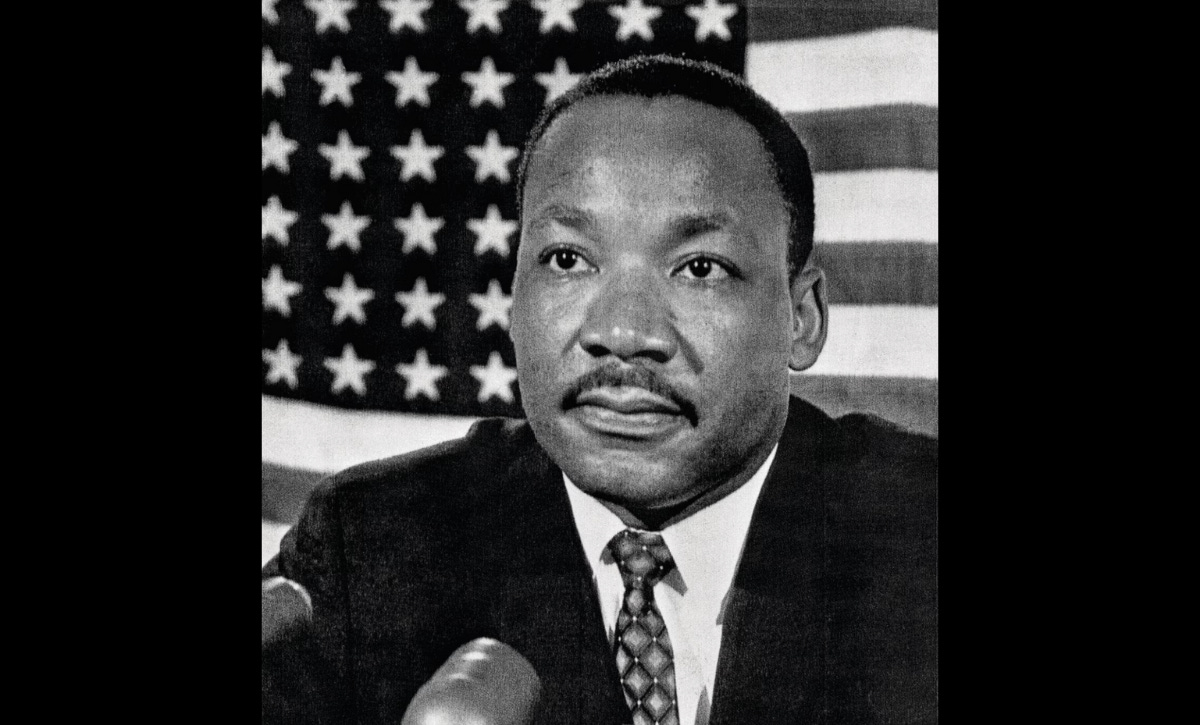
Martin Luther King’s Game Theory
Economics explains why nonviolent resistance is an effective strategy and today’s immigration demonstrations are failing.
Roland Fryer, writing in The Wall Street Journal, uses game theory to explain Martin Luther King Jr.’s nonviolent strategy as a mechanism for credibly signaling peaceful intentions, separating genuine reformers from disruptors, and making repression politically costly for moderates. He contrasts this with violent protests, which pool protesters with provocateurs and justify crackdowns.
When I was young, I mistook restraint for weakness and anger for honesty. What I failed to see—and what we still fail to teach students—was that Martin Luther King wasn’t avoiding conflict. He was engineering it, on terms that made progress possible.
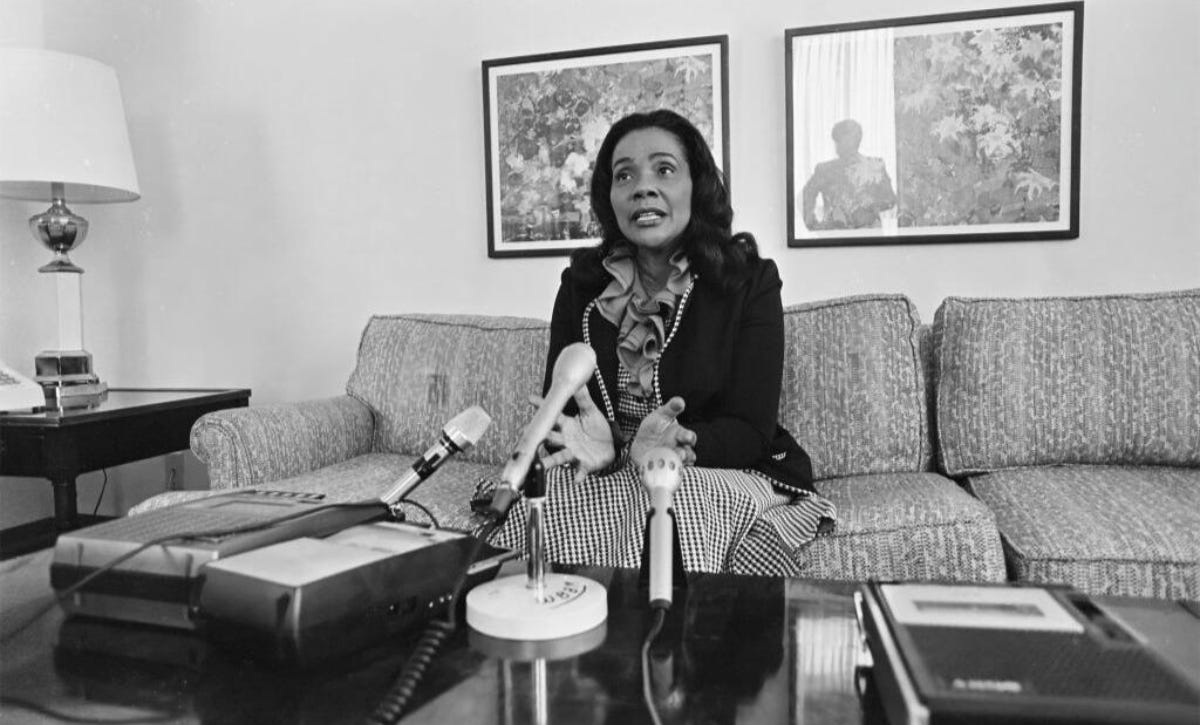
The 15-Year Battle for Martin Luther King Jr. Day
The establishment of Martin Luther King Jr. Day as a federal holiday required 15 years of persistent advocacy after his 1968 assassination, with bills repeatedly introduced by Rep. John Conyers, boosted by Stevie Wonder’s campaigns and Coretta Scott King’s efforts, until President Reagan signed it into law in 1983 amid opposition. The Smithsonian’s National Museum of African American History & Culture briefly chronicles the history of MLK Day, which is now in its 40th year.
Even though it failed to pass in the House, public support for the bill continued to grow, in no small part due to musician Stevie Wonder. The Motown singer and songwriter’s 1980 album “Hotter Than July” featured the song “Happy Birthday,” which served as an ode to King’s vision and a rallying cry for recognition of his achievements with a national holiday.
Wonder continued to spread his message with regular appearances alongside Coretta Scott King at rallies. He also capped a four-month tour with a benefit concert on the National Mall, where King delivered his famous “I Have a Dream” speech 18 years earlier.
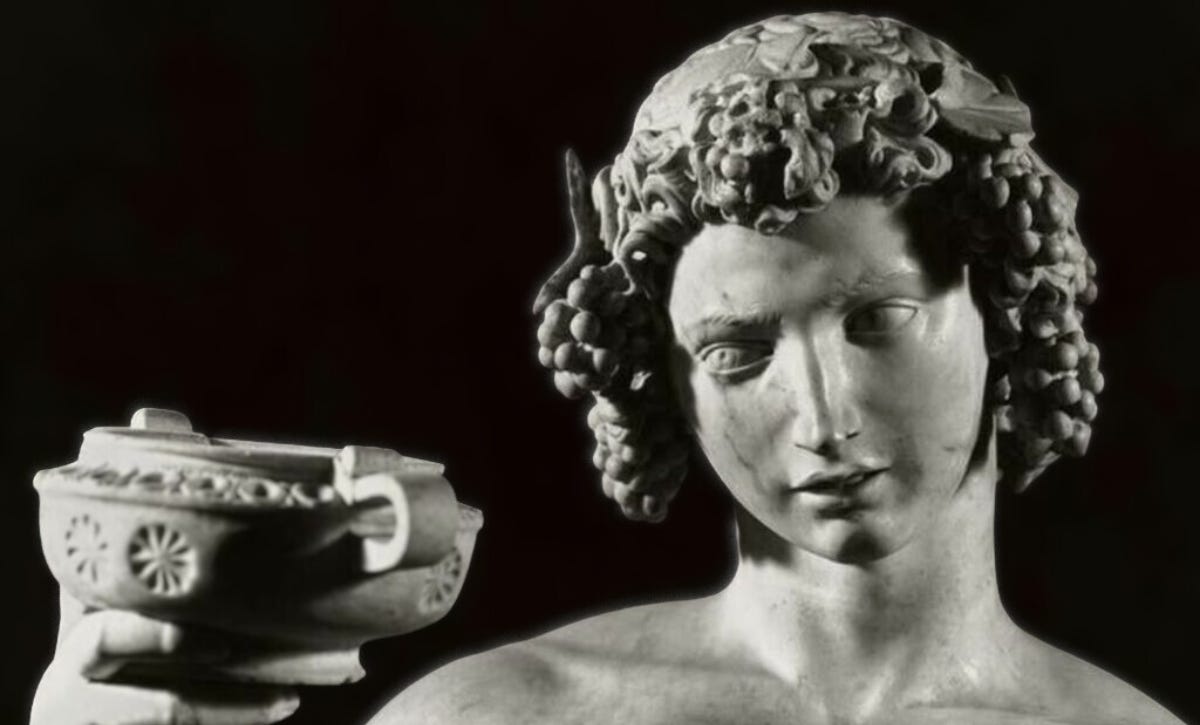
The Relational Cost and Promise of Sobriety
One Person’s Sobriety Led to Isolation. Another’s Led to Belonging.
In Civic Renaissance, Prohuman Foundation advisor Alexandra Hudson reflects on the tradeoffs that alcohol presents individuals and society. First illustrating the role of alcohol as a ‘social glue,’ her post also features a guest essay by Ericka Andersen on the value of sobriety as a path to communal (rather than only personal) flourishing. Andersen argues from a faith perspective that sobriety fosters civic virtues like attention, accountability, and mercy, leading to better relationships and a stronger social fabric.
What I appreciate most in [Andersen’s] writing is the refusal to treat the personal and the civic as separate realms. How we soothe ourselves privately shapes how we show up publicly. Loneliness, stress, and quiet despair do not stay neatly contained. They spill outward, into our relationships, our communities, and our civic life.

The Hidden Meaning of Taking Pictures
What a sunset, a smartphone, and memory reveal about us
Michiko Kimura Bruno writes about the deep psychological urge to photograph fleeting beautiful moments, like sunsets, even when professional images abound, exploring how this act personalizes experience and marks emotional salience. She argues in Psychology Today that photos serve as bridges between inner subjectivity and outer reality, anchoring reconstructive memory, reviving forgotten emotions, and helping us curate an aspirational self that reflects our evolving values and identity.
The brain is constantly generating models of the self—who we have been, who we are, and who we might become. Even idealized or imperfect images express something essential: what we attend to, what we value, and what we are drawn toward. In this light, documenting our lives through photos and videos is not merely an act of vanity or distraction. It is part of how we construct identity over time.
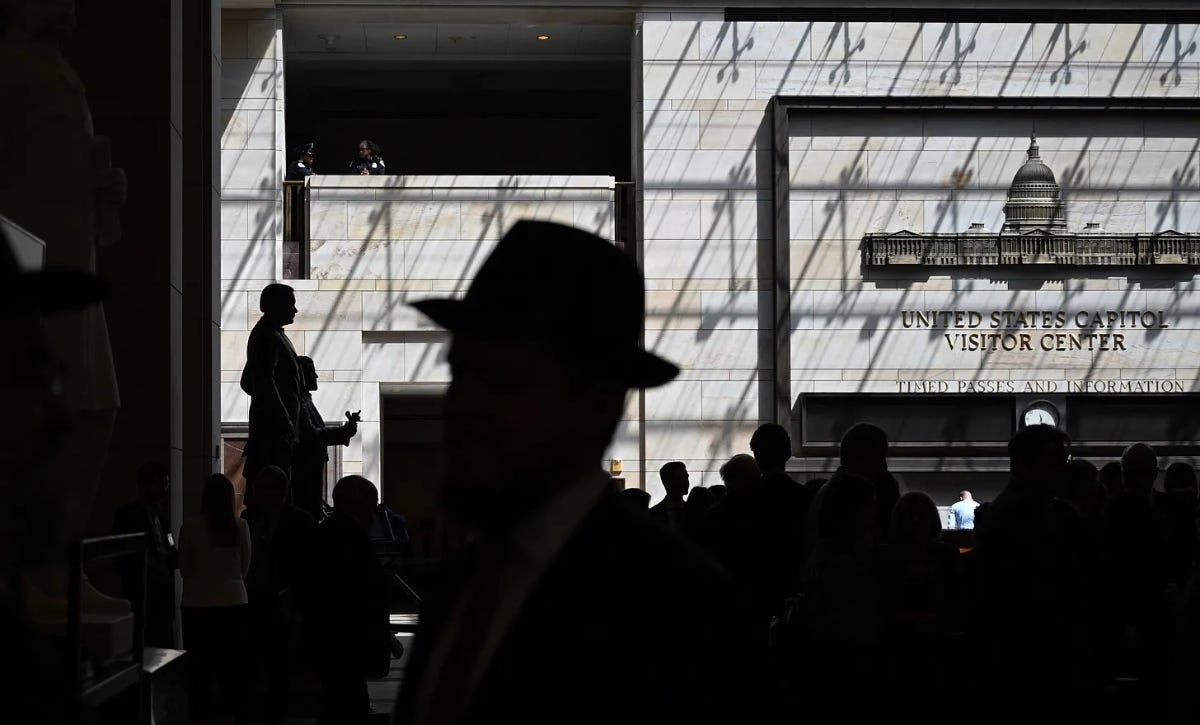
Young Americans Are Turning Antisemitic
A recent survey shows a clear shift toward anti-Jewish sentiment—and it’s worst on the far right.
Cathy Young, writing for the The Bulwark, covers a Yale Youth Poll that revealed a stark generational rise in antisemitic attitudes among Americans under 35, including sharply lower support for Israel as a Jewish state, higher endorsement of tropes like Jewish dual loyalty or excessive power, and greater acceptance of targeting American Jews over Israeli policies. The survey attributes this shift—most marked among those under 35 who self-identified as “extremely conservative”—partly to younger people’s distance from historical events like the Holocaust and greater exposure to extremist content.
The survey, from the Yale Youth Poll, drew on a national sample of nearly 3,500 registered voters with an oversampling of those under 35 and contained a battery of questions that tried to tease out negative attitudes toward Israel and negative attitudes toward the American Jewish community.
One stark fact that emerges from this poll is that there has been a generational shift in a direction that has been both anti-Israel and anti-Jewish.
There are valid debates among conservatives. This isn’t one.
Conservatives must draw a bright line against the bigotry of Nick Fuentes and other extremists.
Robert P. George argues in his Substack that conservatives must draw a firm ‘bright line’ excluding extremists like Nick Fuentes and his ‘groypers’ who promote white supremacy, antisemitism, and bigotry, as these directly contradict conservatives’ foundational commitment to human dignity and equal natural rights. He emphasizes that rejecting ‘groyper’ ideologies is essential to preserving authentic conservatism.
Extremism and bigotry have no place in the conservative movement. They are contrary to the central things conservatives should be dedicating themselves to conserving, namely, the biblical principle of the inherent dignity of every member of the human family, and the civic principle that human beings are “created equal” and “endowed by their Creator with certain unalienable rights.”

Together, we have made immense progress building a foundation for social harmony. But, we still need your help. A generous donor is matching every contribution to the Prohuman Foundation, dollar for dollar, up to $250,000. Join the movement and double your impact today.
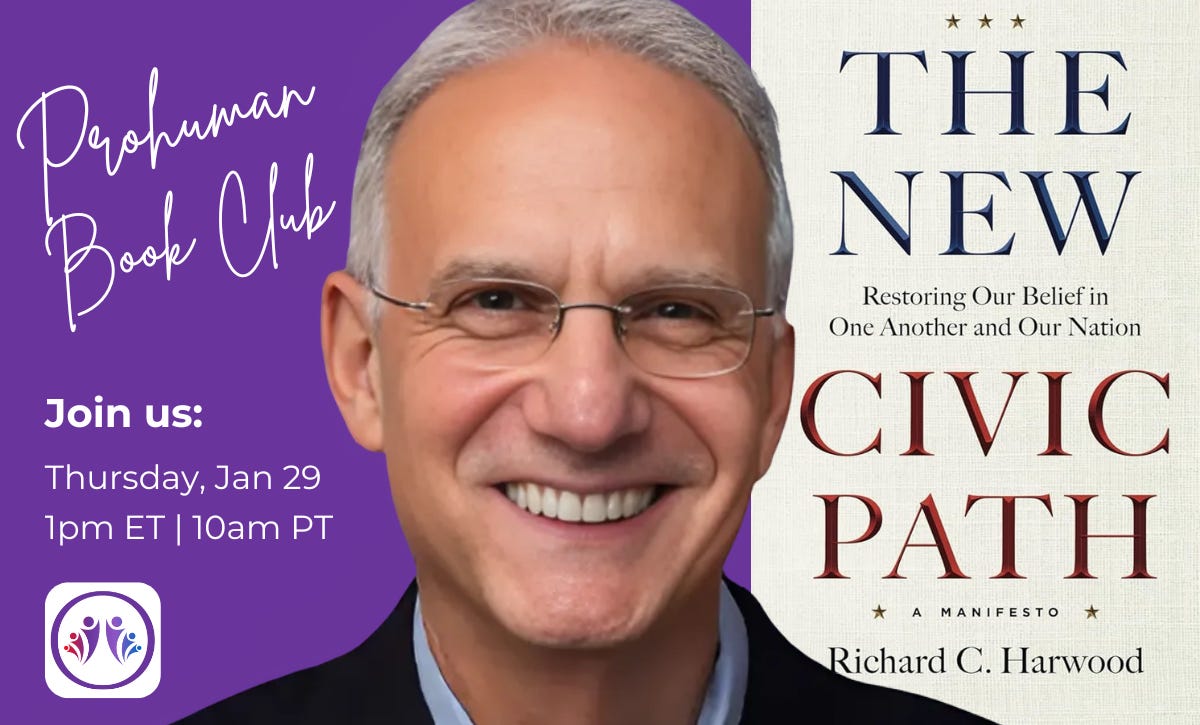
Rich Harwood: The New Civic Path
Rich Harwood joins us on Thursday, January 29 to discuss his book, The New Civic Path: Restoring Our Belief in One Another and Our Nation, where he advocates building community networks and civic groups to restore shared purpose.
Opinions expressed in selected articles do not necessarily reflect those of the Prohuman Foundation. We value diverse perspectives that enrich our understanding of topics close to our mission: to promote the foundational truth that we are all unique individuals, united by our shared humanity.