

What Americans Are Positive About
Writing for his Substack, Flourishing Friday, Clay Routledge shares findings suggesting that most Americans report progress toward an American Dream centered on freedom and family rather than wealth, view the U.S. as a vital force for global progress, express gratitude for past generations, and affirm high levels of personal agency and responsibility to improve the world.
If you spend much time consuming media commentary or scrolling through online discourse, you could easily conclude that Americans are deeply pessimistic about everything from their personal prospects to their country’s future. As we begin a new year, I think it’s a good time to step back and get a more complete picture. It turns out that positive attitudes remain common among Americans; they just don’t get much attention. These positive attitudes matter because they reveal psychological strengths that can be mobilized to address real challenges.
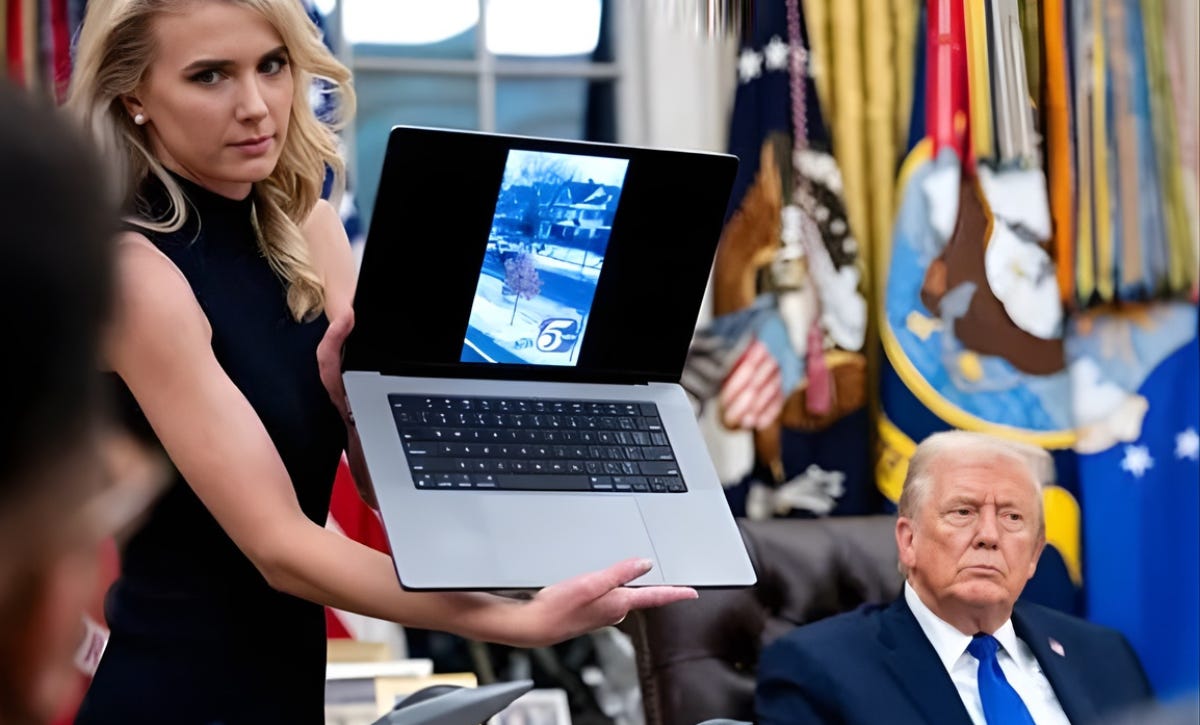
Why video evidence is unable to create a shared reality
Why partisans disagree over the tragic shooting by an ICE agent
In The Power of Us, Anni Sternisko, Dominic Packer, and Jay Van Bavel explain why people watching the same video of an ICE agent fatally shooting Renee Good came to vastly different conclusions. They describe how social identities shape attentional biases, automatic judgments, and motivated reasoning, but suggest that these effects can be mitigated by prompting viewers to watch footage from multiple perspectives.
In a study led by Yael Granot, we tracked eye movements as participants watched an altercation between a police officer and a civilian. Social identity shaped where viewers looked, and those who focused relatively more on the officer later assigned greater responsibility and harsher punishment.
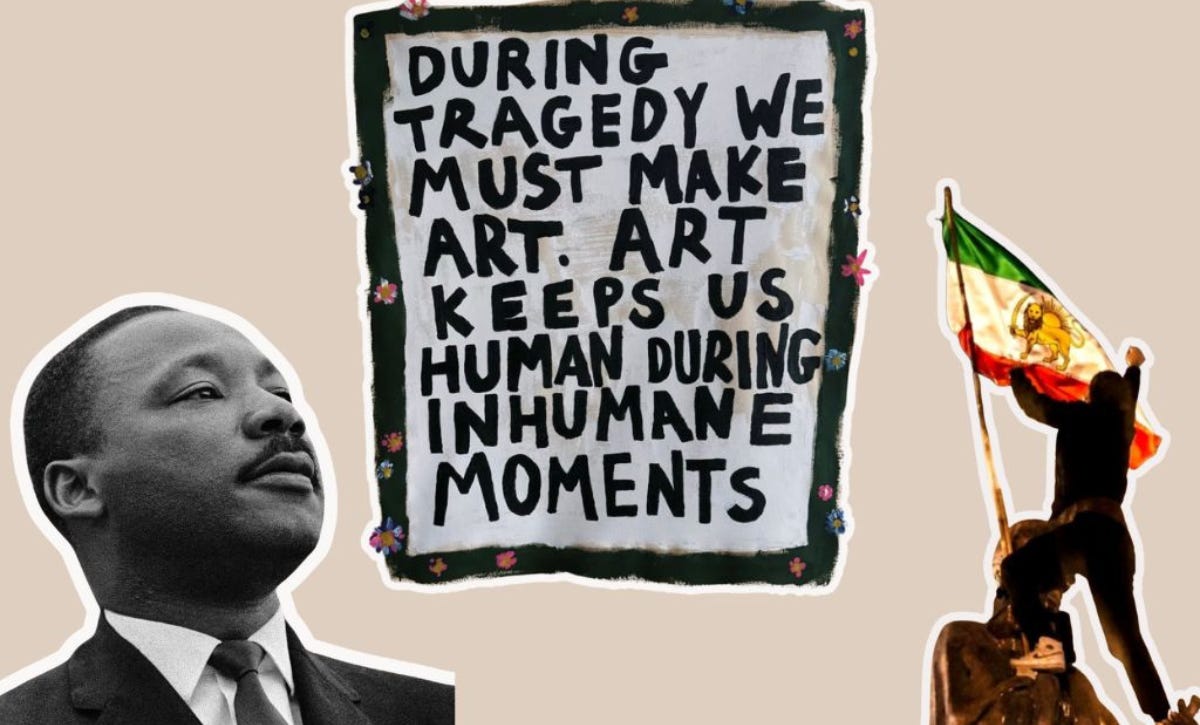
When Art Becomes Resistance
Iran: Our Home, Our Final Battle (A Poem for the People of Iran)
Writing in her Substack, This is Not a Memo, Maryam Mehrtash shares a spoken word poem, “Iran: Our Home, Our Final Battle,” as an act of witness and resistance for Iranians. Drawing on Martin Luther King Jr. Day and historical examples of art born in exile and defiance, she affirms that poetry and creation refuse erasure, preserve culture, and fuel the struggle for freedom.
Some of the most enduring works of art were born under threat or in exile. Dante Alighieri wrote his masterpiece, The Divine Comedy, while banished from his native Florence. Victor Hugo penned his monumental novel Les Misérables from exile from France. Creation, in these moments, wasn’t indulgence. It was survival.
Iran has always understood this. From classical Persian poetry, Rumi and Hafez, to the street art of the Woman, Life, Freedom movement, art has been how Iranians remember who they are when power tries to rewrite them.
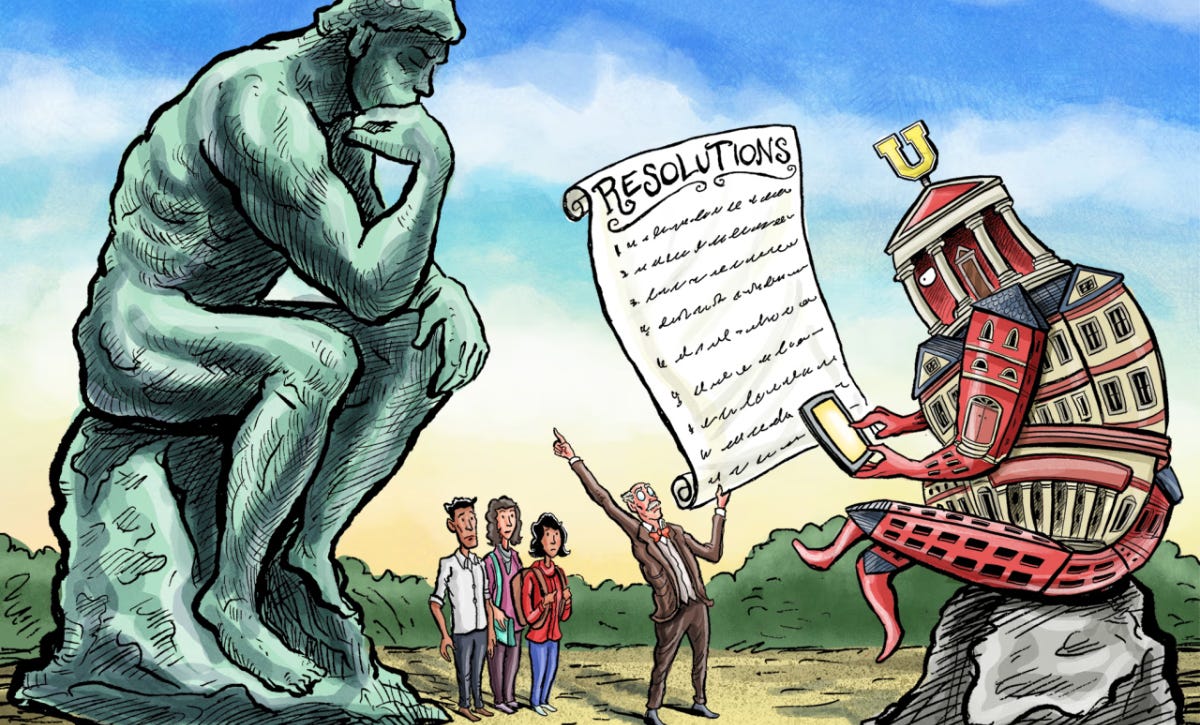
Is a Four-Year Degree Worth It?
If colleges and universities want families to answer ‘yes,’ they’ll need to make some changes on campus.
Writing in The Wall Street Journal, Dartmouth College president Sian Leah Beilock argues that American families are rightly questioning the value of a four-year degree amid soaring debt, job-market struggles, and ideological conformity on campuses. To restore public trust, she urges universities to prioritize affordability, guarantee strong return on investment through career outcomes, refocus on open learning rather than political posturing, emphasize equal opportunity over equal outcomes, and reinstate standardized testing to support merit-based mobility.
Our institutions must reclaim a narrower, firmer sense of our role. That means embracing institutional neutrality—or restraint, as we call it at Dartmouth—on issues that don’t directly affect our mission or core functions. When we, as institutions, rush to issue statements every time there’s a national or global controversy, we signal there’s a “right” position and that opposing views are unwelcome.

Together, we have made immense progress building a foundation for social harmony. But, we still need your help. A generous donor is matching every contribution to the Prohuman Foundation, dollar for dollar, up to $250,000. Join the movement and double your impact today.
Opinions expressed in selected articles do not necessarily reflect those of the Prohuman Foundation. We value diverse perspectives that enrich our understanding of topics close to our mission: to promote the foundational truth that we are all unique individuals, united by our shared humanity.