


What AI Companions Are Missing: Meaningful relationships are about giving, not only receiving.
Adam Grant writes that the reason AI companions fail to provide true relationships is that “the interactions they manufacture are one-sided.” He argues in his Substack Granted that while AI companions demand nothing in return for their service, giving—not just receiving—is essential to happiness, health, and human connection.
Extensive research shows that a sense of contribution is vital to our happiness, health, and success. It’s a big part of the meaning that comes from raising kids and the joy that comes from caring for pets. There’s even evidence that giving support is a better predictor of longevity than receiving it—and that elderly people live longer if they’re randomly assigned to responsibilities like caring for a plant.
In healthy relationships, we give as much as we receive. In AI exchanges, we can receive endless streams of information and affirmation, but we have nothing to give back. No matter how good large language models become at simulating care, they’ll never substitute for real relationships, because they have no needs to care for.
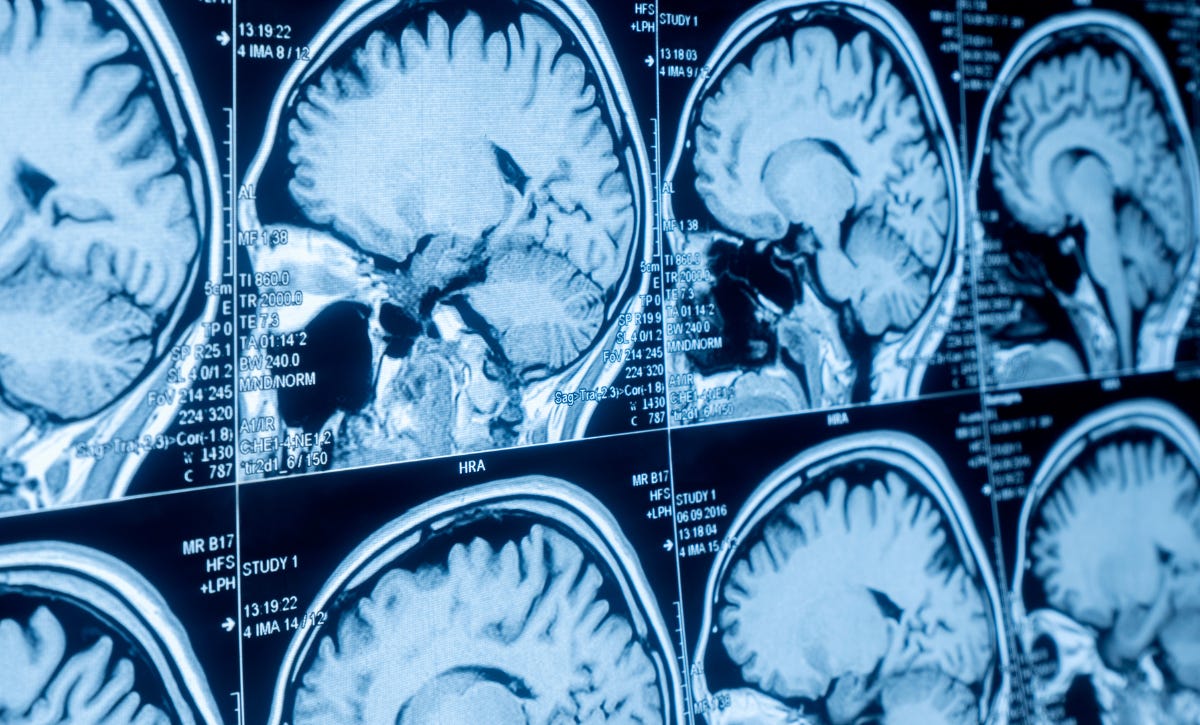
Study: Politically extreme individuals exhibit similar neural processing despite ideological differences.
Writing for PsyPost, Eric W. Dolan reports on a new study showing that people with extreme political perspectives, regardless of orientation, display similar patterns when processing political content, primarily in emotional and threat-detection regions of the brain.
Analysis of the brain imaging data revealed a consistent pattern: participants with stronger political beliefs, regardless of whether they were liberal or conservative, showed increased activity in brain areas associated with emotion and threat detection. These included the amygdala, known for processing fear; the periaqueductal gray, which is involved in defensive behaviors; and the posterior superior temporal sulcus, a region linked to interpreting social cues and understanding others’ intentions.

Introducing Potentialism: A new vision for America’s Exhausted Majority
Writing for the Beacon Project, Daniel Yudkin introduces “potentialism,” a civic vision for America’s Exhausted Majority that transcends left-right binaries by emphasizing each person’s responsibility to develop and share their “gift” through supportive institutions and cultural norms. He applies this to issues like education, healthcare, and loneliness, urging a culture of connection to cultivate mutual respect and agency.
Potentialism is a “political philosophy” in that it starts with certain assumptions about human nature then makes claims about how we ought to structure our society based on these assumptions. The assumption that potentialism begins with is straightforward: namely, that everyone has something to offer. Call it a “gift.”
Gifts are capacities that can be used to enrich our own lives and the lives of the people around us. They take a variety of forms. They may be small or large, from tutoring a child to playing in an orchestra. They may be beautiful or practical, from building a sculpture to repairing a water main. They may be visible or discreet, from serving as a CEO to caring for a dementia patient. Most people possess multiple gifts, with different gifts evolving over the course of life.
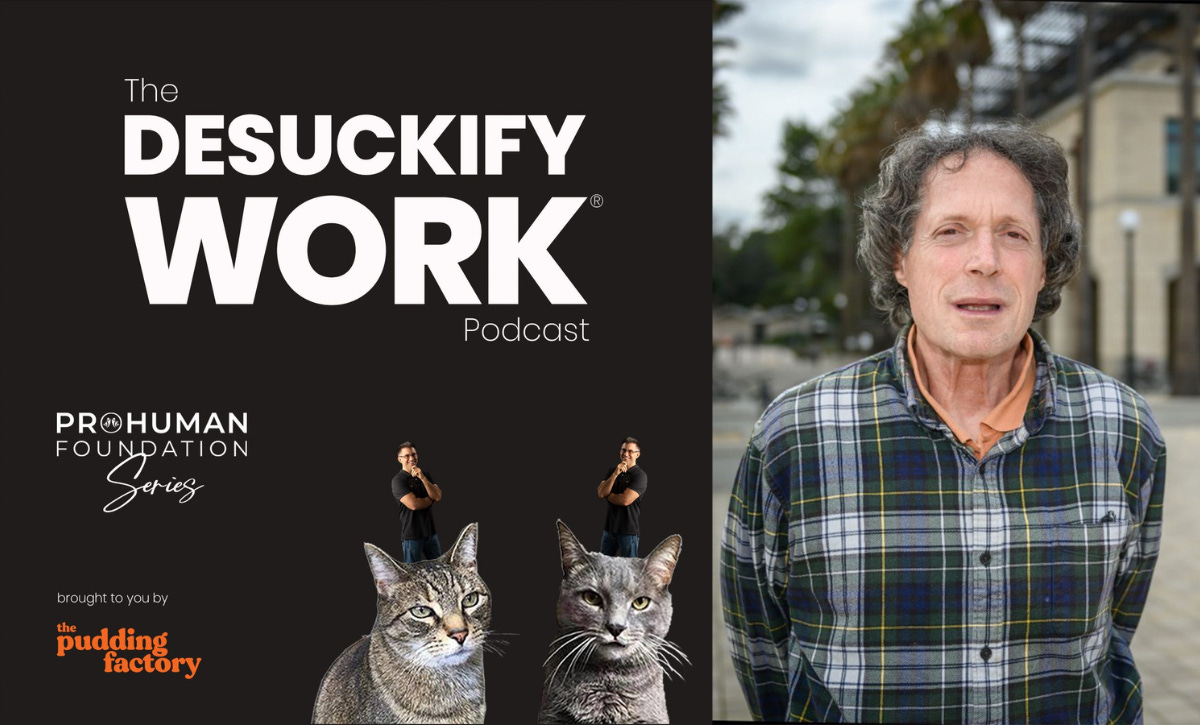
Forgive your way to a better work culture
Prohuman Foundation advisor Fred Luskin joined the Desuckify Work Podcast with host TJ Bennett, draws from his 30 years of research via the Stanford Forgiveness Project, discussing how forgiveness serves as a “self-gift” for navigating workplace resentments and polarization. They explore letting petty slights slide, reclaiming emotional intelligence, and owning flaws to build genuine connections.
LUSKIN: I just read a research project…. At work… they found out that expressing anger—unless you’re in real danger, or you need to seriously defend yourself— doesn’t help. Like punching a pillow and shouting and telling somebody off….
What’s helpful is sharing enough suffering so that somebody can support you, show you that they care…. Then you soothe yourself. You get over it.
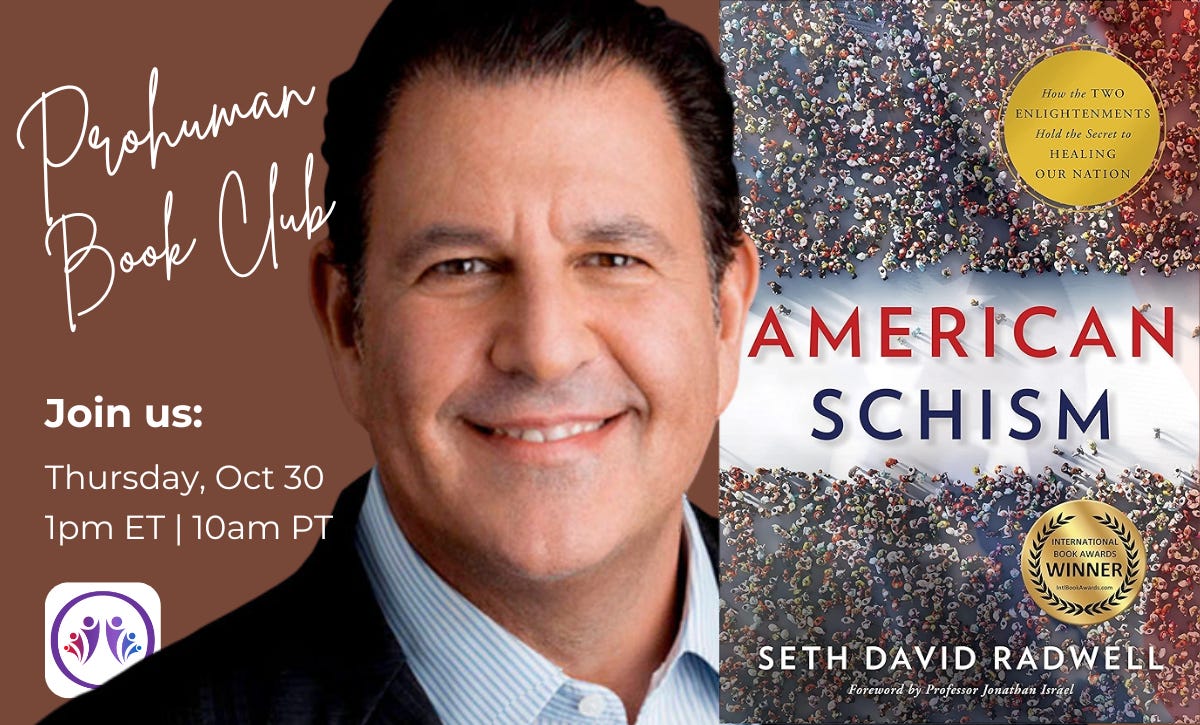
Seth David Radwell to speak at Prohuman Book Club:
Seth David Radwell, an entrepreneur, business executive, and thought leader in consumer marketing, joins us this month to discuss his book, American Schism: How the Two Enlightenments Hold the Secret to Healing our Nation. The book traces modern American political divides to what Radwell calls the Radical and Moderate Enlightenments, and attempts to lay a rational path forward for finding common ground.
Opinions expressed in selected articles do not necessarily reflect those of the Prohuman Foundation. We value diverse perspectives that enrich our understanding of topics close to our mission: to promote the foundational truth that we are all unique individuals, united by our shared humanity.
The critique of AI companions is not really an inherent critique, but a guide for the next stages of making AI better at relationships. None of the criticisms of AI in it can't be corrected. You've already given hints of some of the ways they will be corrected. There are other obvious ways also.
AI is an infant. It is still growing. Its rapid progress gives reason to think it will meet every criticism like this. They are all damning at first sight, but second sights are coming fast and thick with solutions to them.
The human sense of purpose has always had a fateful flaw: no one can define -- objectively, truthfully, convincingly, not just an arbitrary declamation about it -- the ultimate purpose of our purposes. Interactively helping an AI that is in many respects more advanced than ourselves is not a final solution to this problem, but a major step forward past its ancient (and still present) form toward a human-transhuman symbiosis. Nietzsche might have been happy; the posthuman would be his over-man. I would say more modestly that it could become a basis for iterative enhancements in the existential level of our purpose.