

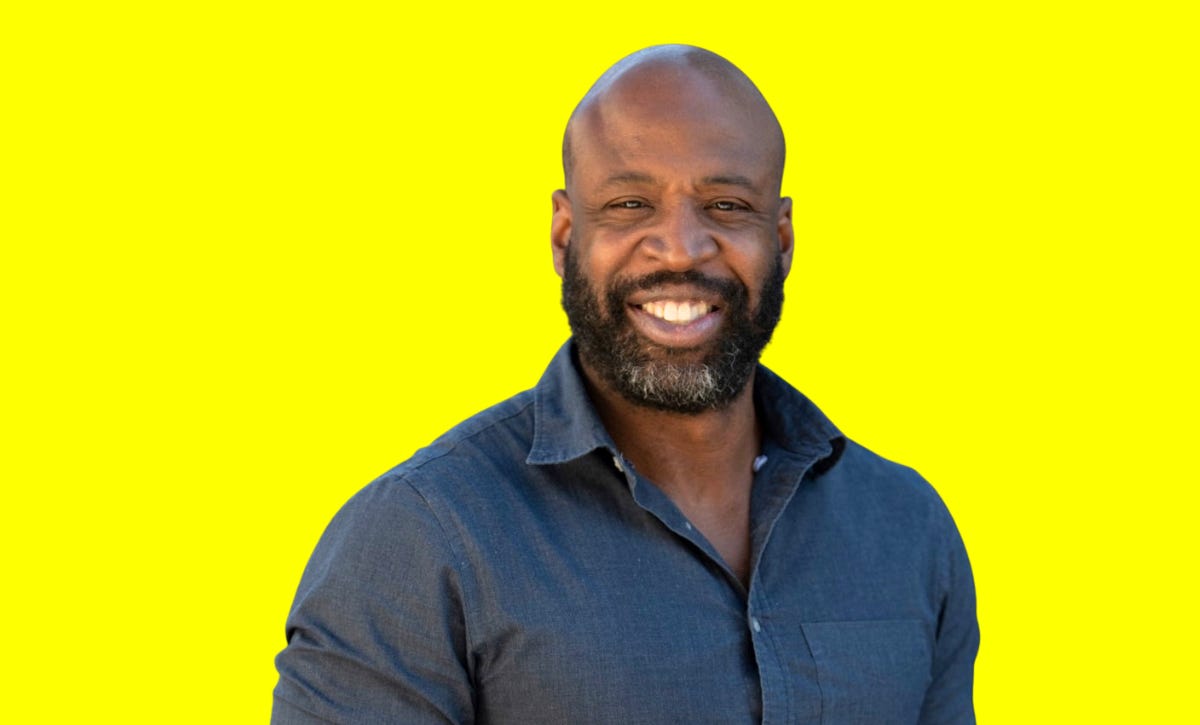
DEI is Defanged with Erec Smith
Prohuman Foundation advisor Erec Smith joined Connie Morgan on the Free Black Thought podcast to reflect on his shift from academia to becoming a research fellow at the Cato Institute. Topics range from the challenges of adapting to today’s cultural landscape to sharing insights from Capitol Hill testimony to applying the study of rhetoric to improve civil discourse.
MORGAN: The person who is hearing something they disagree with and having this visceral reaction and getting super emotional and exploding because someone simply said something that they don’t like… if someone were to come to you and say, ‘this is my problem….’ what would be the first tips that you would give them to improve….?
SMITH: Well, I would ask them, ‘what are your core beliefs and why do you have them?’… We may not even realize why we have the opinions we have, but if we look at our values—our values, our attitudes, our beliefs—and we do our best to figure out where they came from, and why we still have them, that’s an excellent first step, in my opinion.

What We Get Wrong About Online Toxicity
Writing in his own Flourishing Fridays newsletter, Clay Routledge reports on new research from Stanford University suggesting that people overestimate the prevalence of toxic behavior and misinformation on social media, attributing it to a large portion of users when it’s actually driven by a small, prolific minority. The researchers showed that correcting this misperception reduced participants’ cynicism and increased positive emotion. The work highlights that most people share a desire for healthier online environments.
The misperception is not rooted in confusion about what counts as harmful content. In one of the studies, participants were shown actual Reddit comments and asked to identify which ones would be classified as toxic. They were highly accurate. They understood what toxic content looks like. They simply believed it was coming from a much larger portion of the population than it actually is.
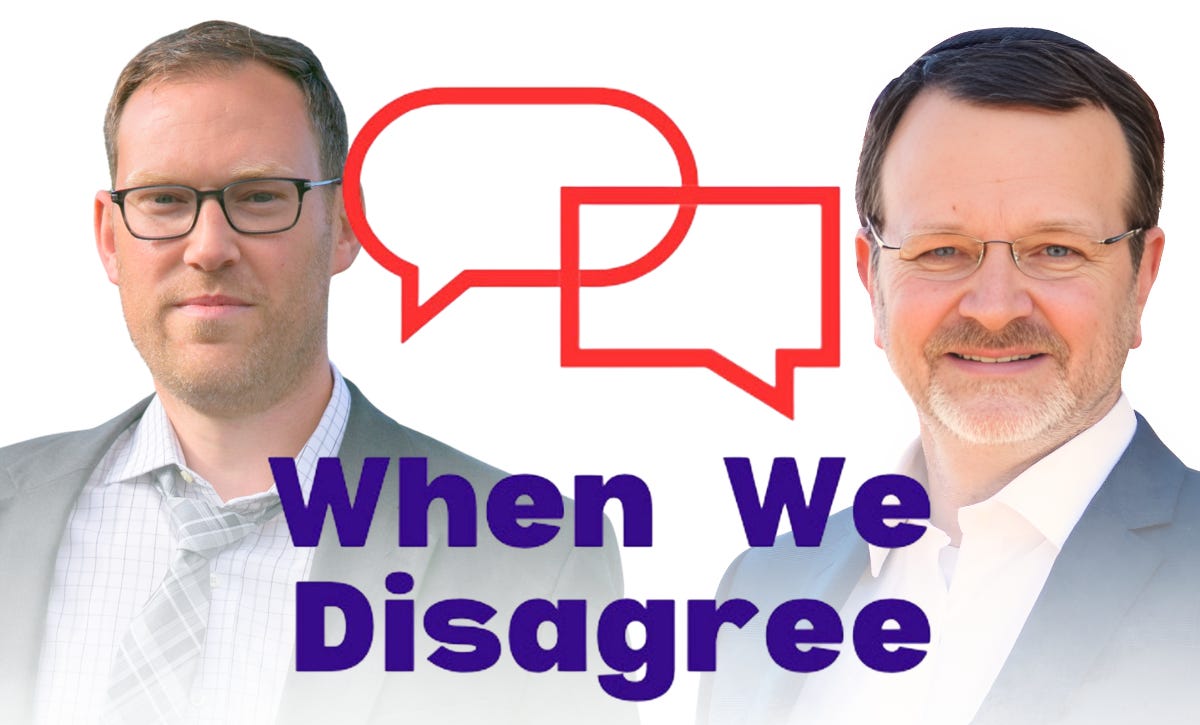
Music and Common Ground: From Holy Texts to Human Connection
Prohuman Foundation advisor Jason Caplan joined Michael Lee for his When We Disagree podcast to discuss how doctrinal disagreements at an interfaith conference inspired him to create the Universal Language Room, using improvisational music to build connection. Caplan explains how music bypasses verbal arguments and defense mechanisms and warms people to genuine dialogue, supporting healthier, more respectful debates on divisive topics.
CAPLAN: I think when people first love dialogue, then the debate can be healthy. If you go into a debate saying, ‘I’m gonna win,’ it’s not much of a debate. But if you go into the debate saying, ‘I just love exchanging ideas and I’ve already—with this person across from me—exchanged musical ideas… I want to hear what you have to say about politics.’ Okay…. Step two would be, bring it to the debate with that respect and joy of dialogue that you heard or experienced.
Talking Music with the “We Made This Political” co-hosts
For his Come Together Music Podcast, Shaka Mitchell interviewed his fellow Prohuman Foundation advisor Lauren Hall with Hall’s We Made This Political co-host Lura Forcum. They share songs evoking best friends, parenting, and protests in a surprising conversation that highlights the power of music as a “bonding agent” helping strangers find common ground.
MITCHELL: This whole idea that in every generation, not only have there been, but there must be nonconformists that are pushing back against some of the power structures…. And I just think that’s really important. And I say this as someone who is… more dispositionally conservative… not politically, per se…. I think that nonconformity is really important—at least the ability to live in a society where we can ask the question: ‘is this the best idea? Is this the right direction? Let’s push against this a little bit. Let’s sharpen one another. Let’s do it in a way that’s nonviolent….’
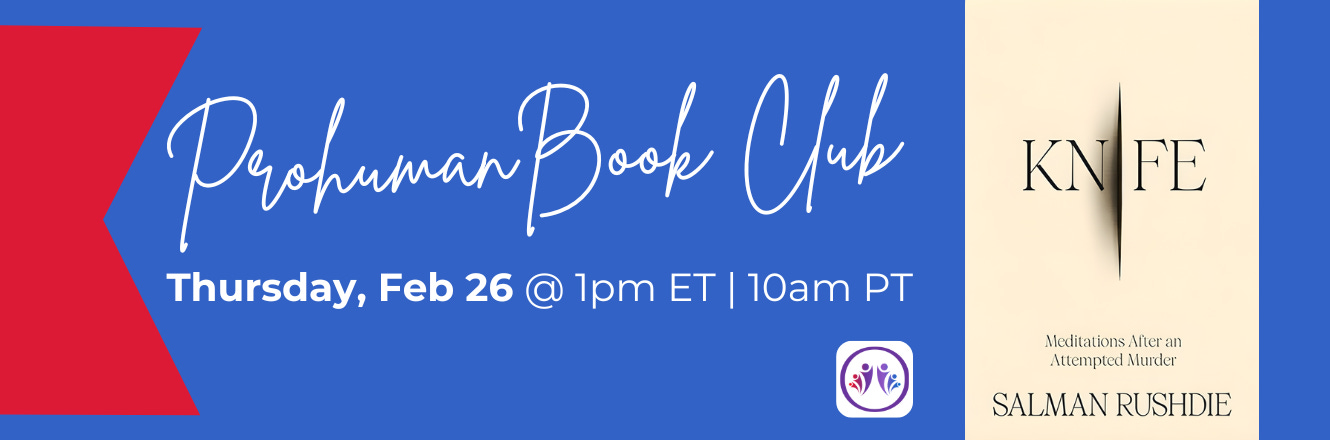
KNIFE: Meditations After an Attempted Murder
The Prohuman Book Club meets this week to discuss Salman Rushdie’s memoir, Knife: Meditations After an Attempted Murder. The book recounts the attack and Rushdie’s recovery while offering a defense of free speech against ideological violence, as well as thoughts on the role of art in challenging orthodoxy. Rushdie argues that resilience and love ultimately prevail over hatred.
Our first “author-less” meeting promises to be fun and interesting—join us.

Together, we have made immense progress building a foundation for social harmony. But, we still need your help. A generous donor is matching every contribution to the Prohuman Foundation, dollar for dollar, up to $250,000. Join the movement and double your impact today.
Opinions expressed in selected articles do not necessarily reflect those of the Prohuman Foundation. We value diverse perspectives that enrich our understanding of topics close to our mission: to promote the foundational truth that we are all unique individuals, united by our shared humanity.