

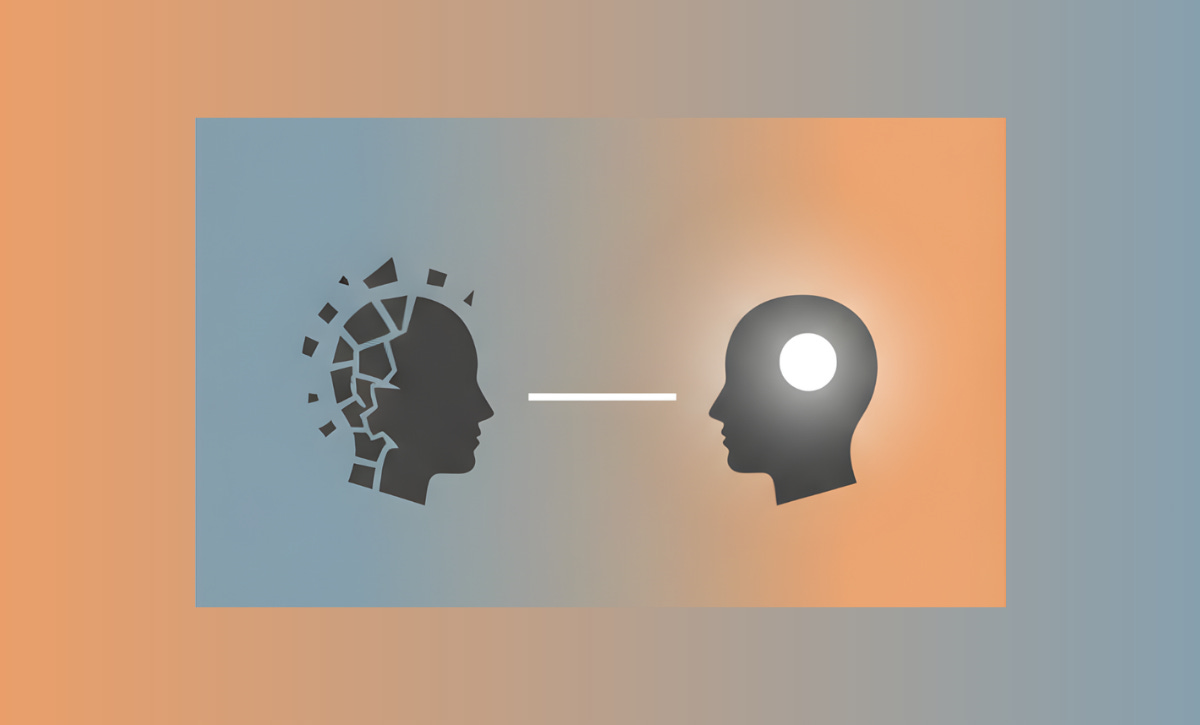
The Perception Gap: Why We Misjudge Others and How to Fix It
James Coan, co-founder of More Like Us, shares findings that Americans dramatically overestimate how extreme, hostile, and threatening their political opponents are. Coan joined Prohuman Foundation advisor Wilk Wilkinson on Derate the Hate, identifying and describing how to fix the ensuing cycle of fear, outrage, and affective polarization plaguing the public square. His organization uses data-driven campus campaigns, social norm messaging, and simple tools like the “CAST” framework (portraying others as Complex, Admirable, Similar, and worthy of Togetherness) to correct misperceptions and cultivate a more accurate, humanizing view of fellow citizens.
Attitudes toward all sorts of groups of people have changed… have improved in many ways. And I think often taking those kinds of steps that…. I mean, it’s astonishing to say looking at, say, data on like black-white marriage. In the 1950s, Gallup interviewed. . . white Americans. Like 4% of white Americans, then, thought it was okay. Now it’s over 90%. So, it’s astounding changes in terms of how people can think and feel about those in other groups. And I think we can emulate some of those strategies that have worked before, which can include conversations and interpersonal relationships, but also involves the information environment and what we see and hear about each other.
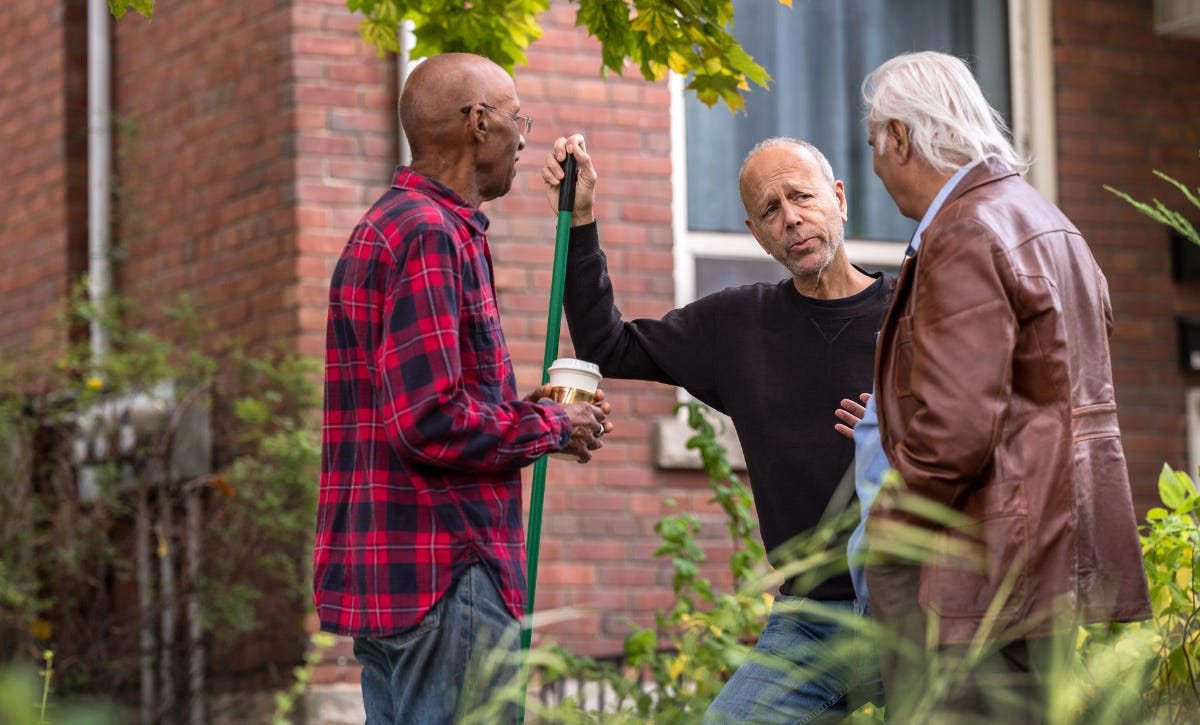
Exposing the Myth of Online Polarization
Independent journalist Aaron Parnas believes the best way to mend the political divide is simple and proven: get off social media, go meet your neighbors in real life, and talk about shared values rather than partisan labels. He speaks with Allison Reese and Scott Barry Kaufman for their podcast, This Might Get Awkward.
PARNAS: I’m a big believer in getting to know the person, not just a story, right? I mean, every person behind each story has their own story. And that to me is so much more interesting than just a headline.

A New Treatment for Childhood Anxiety: A small dose of independence turns out to be the best remedy.
Pamela Paresky, writing in her own Habits of a Free Mind, claims that childhood anxiety and mental health issues among U.S. adolescents have surged dramatically despite greater access to therapy, arguing that overprotective parenting and limited use of effective exposure techniques in treatment are contributing to the problem. She highlights clinical psychologist Camilo Ortiz’s “independence therapy” as a promising alternative, asserting that it reduces anxiety faster than traditional methods by encouraging children to engage in daily independent activities of their choice, thereby providing indirect exposure to risk and discomfort that fosters genuine resilience and self-confidence.
In our happiness-oriented therapeutic culture, the insight that suffering is part of the human condition—and that human growth and development is largely a product of what we do with our suffering—seems to have been lost. Instead of helping young people grapple with suffering, we’ve led them to believe that if they’re not happy, there’s something wrong, someone to blame, and some trauma-informed response to which they’re entitled.
Until now.

The extraordinary transformation of a city and its schools
Joining Ken Futernick for Courageous Conversations About Our Schools, Rich Harwood describes how The Harwood Institute helped transform Reading, Pennsylvania—a city plagued by poverty and mistrust—by facilitating community-led listening sessions that uncovered shared aspirations for education, bypassing national culture war debates.
Our task was first to develop a community-led, community-driven agenda around education. And everyone within Reading and outside said, “That’s never going to happen in this environment.” And yet we engaged folks all across Reading, both in English and in Spanish. We engaged leaders in in-depth individual interviews. And Ken, I have to tell you, not a single individual mentioned issues that you would hear in the culture war debates. What they talked about was where their community was, where they wanted their community to go, and importantly, they identified nine key agenda items to move education forward. None of ‘em rooted in culture war. . . . The first step was, could we engage the community in a conversation, not about problems, not about utopian visions, but about their shared aspirations for their community, their kids and education? . . . The answer was an emphatic yes.
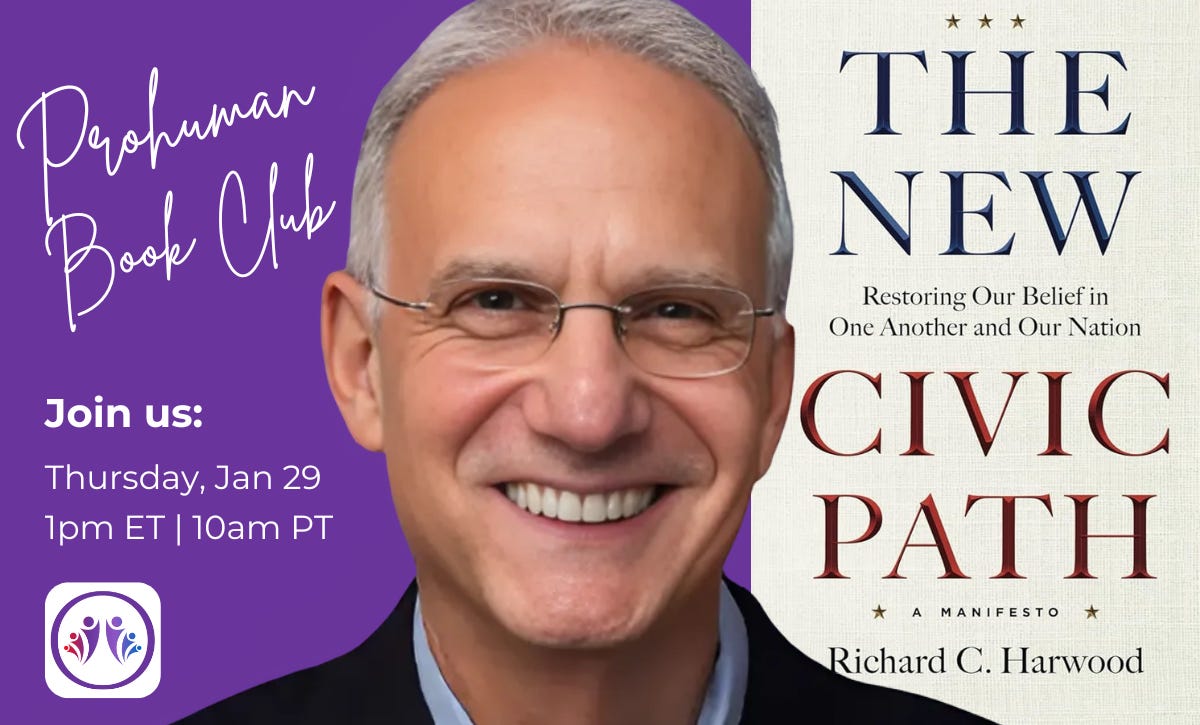
Rich Harwood: The New Civic Path
Rich Harwood joins us on Thursday, January 25 to discuss his book, The New Civic Path: Restoring Our Belief in One Another and Our Nation, where he advocates building community networks and civic groups to restore shared purpose.
Opinions expressed in selected articles do not necessarily reflect those of the Prohuman Foundation. We value diverse perspectives that enrich our understanding of topics close to our mission: to promote the foundational truth that we are all unique individuals, united by our shared humanity.