

The Soul of Civility and Intrapersonal Rhetoric
Real empowerment requires the ability to govern oneself
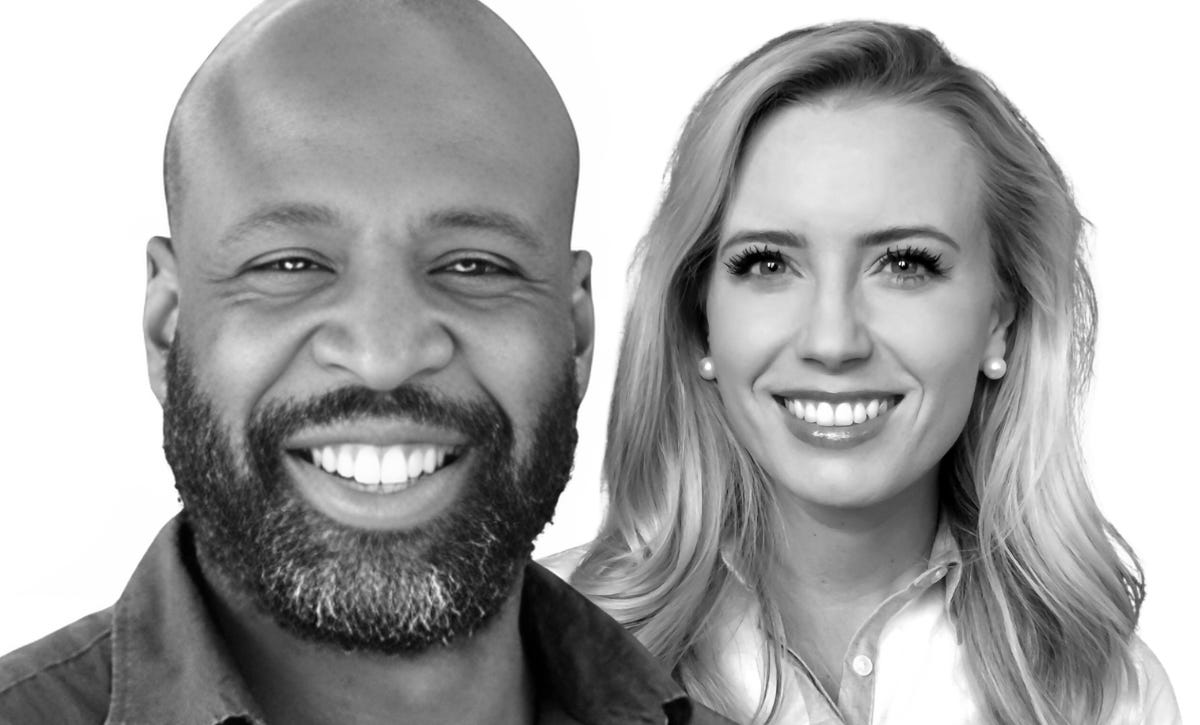
In Mutual Persuasion, rhetorician and Prohuman Foundation advisor Erec Smith reviews Soul of Civility: Timeless Principles to Heal Society and Ourselves by fellow Prohuman Foundation advisor Alexandra Hudson. Smith argues that the book “ultimately centers on rhetoric,” writing that the crisis of civility that Hudson describes can be viewed as “a crisis of internal rhetoric.”
The person who internally rehearses narratives of humiliation, resentment, superiority, or perpetual victimhood will eventually communicate those orientations outwardly. Likewise, the person who rehearses reflection, emotional discipline, curiosity, and self-awareness is more likely to engage others constructively, even amid serious disagreement. Civility is an outward expression of disciplined intrapersonal rhetoric.
Curiosity is one of the nine core character strengths emphasized in the Prohuman Foundation’s free K–12 curriculum.
“Build Together” — Hope and healing, one basketball court at a time.
Prohuman Foundation advisor Jared Armstrong spoke with CBN News about how his nonprofit JAB Camp is using basketball for recovery in southern Israel. To date, the group has renovated 17 basketball courts in conflict-affected areas, reaching more than 3,000 children. Bringing together Jewish, Arab, Christian, and Druze youth on newly renovated courts, the program offers safe havens where children can escape conflict, develop leadership skills, and build resilience.
We chose “build together,” which to me means ‘unity…’ means ‘bringing together as one.’ Something that’s important on the basketball court, is you have to be one unit. I think that’s super important and it aligns with our mission of JAB, which is bringing people together from all different backgrounds.
How can you hate me when you don’t even know me?
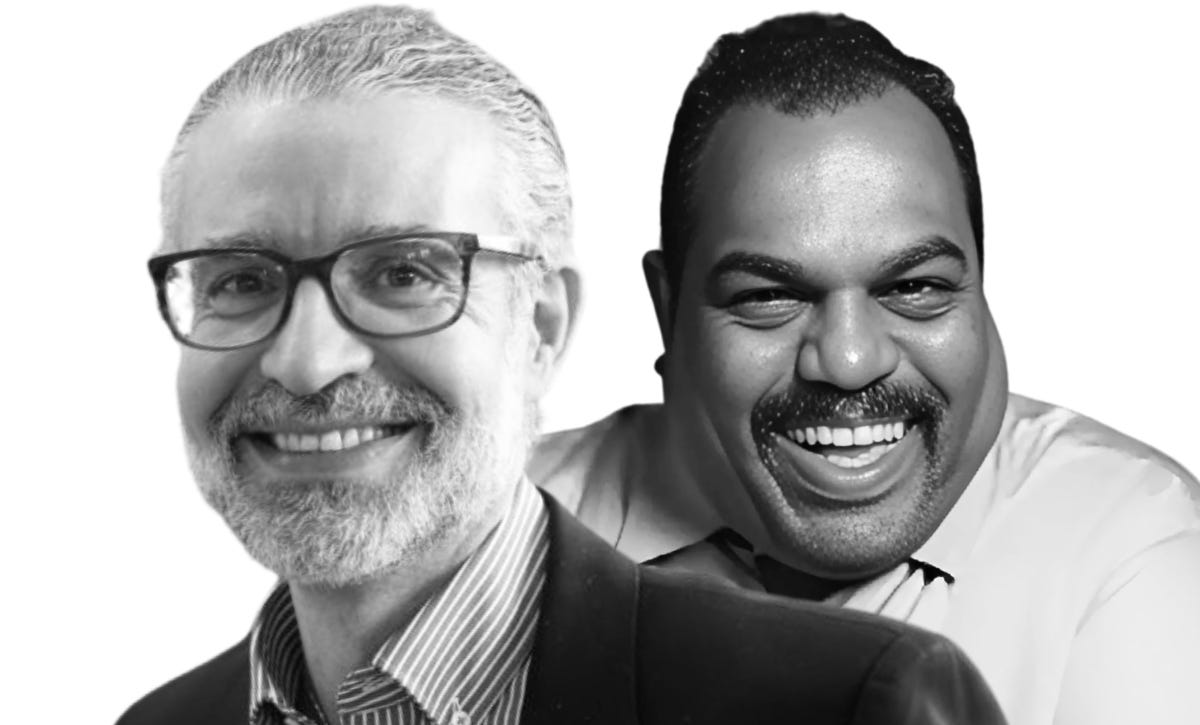
On the Matters of Consequence podcast with host Michael Hanf, Prohuman Foundation co-founder and global ambassador Daryl Davis reveals the finer points of disarming hate through the power of conversation, describing in depth his first encounter with a KKK member, and much more in this immersive discussion.
This was an all-white band. I was the only black member in the band….
The Silver Dollar Lounge had a reputation of being a whites only place. Now, there were no signs that said ‘whites only’ or ‘no blacks allowed,’ or anything like that. But you knew the reputation, and if you were black you did not go there….
After the first set, while on break, I’m following the band to go sit down, I felt somebody from behind put their arm across my shoulder. Now, I didn’t know anybody in here, right? So I’m turning around trying to see who’s touching me, and I’m thinking, ‘uh-oh… this is when it starts,’ right?
But this guy had a big smile on his face, and he says, ‘Man I sure love your all’s music.’

Be Excellent, Not Efficient
What I told this year’s graduating class.
Writing in Persuasion, Eboo Patel summarizes his recent commencement speech at Denison University arguing that our humanity isn’t found in how fast we can produce, but in the care we take to create. Whether building a career or a meal, he says, the goal shouldn’t be to outrun the machines, but to cultivate the human judgment and craft that makes us precious to one another.
You are not obligated to ride the wave that presents itself as inevitable. This is not a comment against Instagram, or instant mashed potatoes, or artificial intelligence. It is a comment about embracing human judgment. Your judgment. The judgment that gets cultivated by a liberal arts education of constant reading, thinking, discussing, opining, revising. It’s the judgment that can look at a rising tide—whether it’s processed food or gambling apps—and say “I think that wave is more likely to destroy cities than lift boats.” Or simply, “No thanks, I don’t want to live that way.”
You may decide that it is just fine for a robot to drive you from point A to point B. Or to do your taxes. But you want a sentient being to share your meals with, and to lay their head on the pillow next to you at night. It’s the judgment that recognizes you don’t want to spend the second half of your life apologizing for what you did during the first half. Just remember: you get to decide what matters, and you get to decide how to organize your life around it.

Together, we have made immense progress building a foundation for social harmony. But, we still need your help. A generous donor is matching every contribution to the Prohuman Foundation, dollar for dollar, up to $250,000. Join the movement and double your impact today.
Opinions expressed in selected articles do not necessarily reflect those of the Prohuman Foundation. We value diverse perspectives that enrich our understanding of topics close to our mission: to promote the foundational truth that we are all unique individuals, united by our shared humanity.
The core crisis is the deliberate erosion of the 1948 Universal Declaration of Human Rights (UDHR) and national sovereignty by unelected academics, lawyers, and international courts. The UDHR serves as the ultimate barrier against totalitarianism—whether fascist, Marxist, theocratic, or technocratic. When elites weaken this document, citizens lose their fundamental rights entirely.
This "crisis of civility" is the active abrogation and destruction of Article 29 of the UDHR. Article 29 guarantees that your freedom of belief, speech, movement, and property remains absolute until your actions damage, harass, or endanger someone else. It permits legal limits on rights only to protect the rights of others and the public good equally. Today, individuals are breaking this exact rule, and the legal system actively supports this behavior, replacing equal protection with rights based on identity.
Authorities destroy the universality of rights by rewriting laws and legal practices around "oppressor" and "oppressed" labels. This identity-based classification replaces universal rules with a dual standard of justice. For example, a person in a protected group who destroys property or harasses an alleged "oppressor" escapes punishment. Meanwhile, an "oppressor" who commits the exact same act against a minority faces full prosecution. Stripping away the universal application of the law destroys the core safeguard of the UDHR.
This legal reclassification mirrors the early stages of the Russian Revolution, where the state weaponized the legal system to eliminate universal protections. Lenin used popular slogans like "Peace, Land, and Bread" and initial decrees to upend the legal system before the public realized they had lost their fundamental rights. Today, this shift builds a weaponized grievance culture, bypasses democratic processes, and establishes a mechanism for mass abuse that actively strips citizens of their existing legal protections. Because the courts no longer work for you based on universal principles, you lose your existing legal protections entirely depending on which category you belong to...
Simultaneously, international courts and Western elites directly destroy UDHR protections by overriding national sovereignty. When transnational frameworks nullify local democratic votes in nations like Germany and France, they eliminate the citizen's right to democratic self-determination. This top-down imposition erodes freedom of speech and the presumption of innocence, replacing universal individual rights with collective, ideologically driven mandates. By overriding local ballots, these courts strip voters of their power to defend their own constitutional and universal rights.